GQ and Down Syndrome
In a recent article) in GQ magazine a certain writer demonstrated a stunning level of ignorance when he wrote:
Boston is like America’s Bad-Taste Storm Sewer: all the worst fashion ideas from across the country flow there, stagnate and putrefy. Due to so much local in-breeding, Boston suffers from a kind of Style Down Syndrome, where a little extra ends up ruining everything.
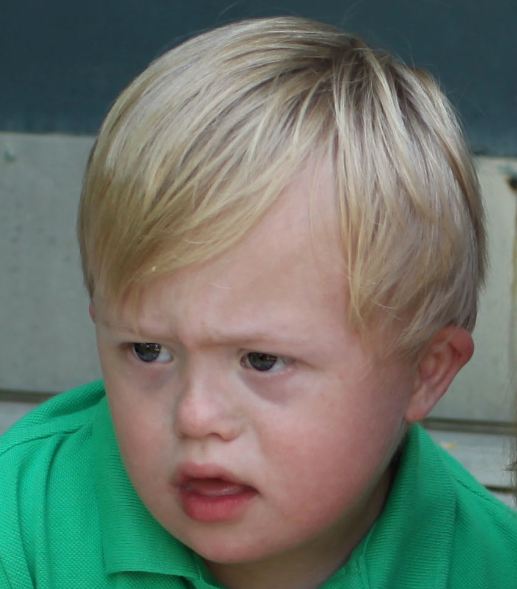
A furrowed brow for GQ
Inherent in this statement is the idea that Down Syndrome is something to be disdained because of its unfortunate effect of “ruining” an otherwise socially acceptable, typical child. Now, to get a proper perspective on how offensive a statement like this is, replace the Down Syndrome specific references with terminology used to describe other minority populations. Tell me, as you read below, how long do you think it would take for the writer and/or editor to be removed from their post and possibly never be given the opportunity to write again? Are you ready?
Due to so much local in-breeding, Boston suffers from a kind of Style African American, where being black ends up ruining everything.
Or
Due to so much local in-breeding, Boston suffers from a kind of Style Latino, where being brown ends up ruining everything.
While the substitution doesn’t work perfectly, you get the point. If a similarly offensive statement was made about another TRULY protected group, there would be hell to pay. Somehow, having Down Syndrome makes you less of a person in some people’s eyes, which has led to a depressingly high abortion rate of 90% when an unborn child is known to have Down Syndrome. I’m glad to say that, at a minimum, GQ pulled the offensive remarks from the original story and even had the decency to send an apology letter to Emily after she sent a letter to the editor. Like I said before, if the offensive comments would have been targeted at a different minority group, I bet the action taken against the writer and editor would have been severe.
Here’s Emily’s letter to the editor and the follow up mail from GQ:
Dear Editor:
How disturbing to read blogs, headlines and online comments about your careless editorial regarding Boston’s “Style Down Syndrome.” What really concerns me is the characterization of people with Down Syndrome as ruined. That’s the sort of dehumanizing statement that makes it okay to mock people with Down Syndrome, and maybe bully them, abuse them or keep them from ever being born in the first place. For those of us who fight every day to educate a world that wants nothing less than perfection, your insensitive rhetoric throws us 10 steps back.
I know you’ve received numerous letters criticizing your editorial and calling for a public apology. My intent is no different. I would like to see your acknowledgement and sincere apology to a community of mothers, fathers, sisters, brothers, grandparents, cousins, friends and countless others who have the privilege of loving someone with Down Syndrome. It is my hope that those responsible for the comment on your editorial staff will be disciplined and appropriately educated on the inaccuracy of their comment that has hurt so many.
Thank you for your prompt attention to this matter.
Sincerely,
Emily, Seth’s Mom
And GQ’s response:
Dear Emily,
We received your letter and absolutely understand that we have caused you and your loved ones pain. Hurting anyone’s feelings or being disrespectful or cruel was certainly never our intent, but your letter helped us understand how poorly chosen our words were. What we initially posted was insensitive and ill-informed, and we’ve removed the offensive language from the website. We deeply regret our error in judgment. There is no excuse. We are both very sorry.
Sincerely,
Sean Fennessey, editor, GQ.com
John B. Thompson, writer, GQ.com
I would encourage other readers of the Fun House to send a similar note to GQ so they avoid “poorly chosen words” in the future.